

As a seasoned supplier of stainless steel ties, I often encounter inquiries about the Young's modulus of these essential products. Understanding the Young's modulus of stainless steel ties is crucial for various applications, from construction to industrial uses. In this blog post, I'll delve into what the Young's modulus is, its significance for stainless steel ties, and how it impacts their performance.
What is the Young's Modulus?
The Young's modulus, also known as the elastic modulus, is a measure of the stiffness of a material. It describes the relationship between stress (force per unit area) and strain (deformation) within the elastic range of a material. In simpler terms, it tells us how much a material will stretch or compress when a force is applied to it.
Mathematically, the Young's modulus (E) is defined as the ratio of stress (σ) to strain (ε):
[ E = \frac{\sigma}{\varepsilon} ]
Where stress ((\sigma)) is calculated as the force ((F)) applied to the material divided by its cross - sectional area ((A)):
[ \sigma=\frac{F}{A} ]
And strain ((\varepsilon)) is the change in length ((\Delta L)) of the material divided by its original length ((L_0)):
[ \varepsilon=\frac{\Delta L}{L_0} ]
The unit of the Young's modulus is the same as the unit of stress, which is typically pascals (Pa) in the SI system.
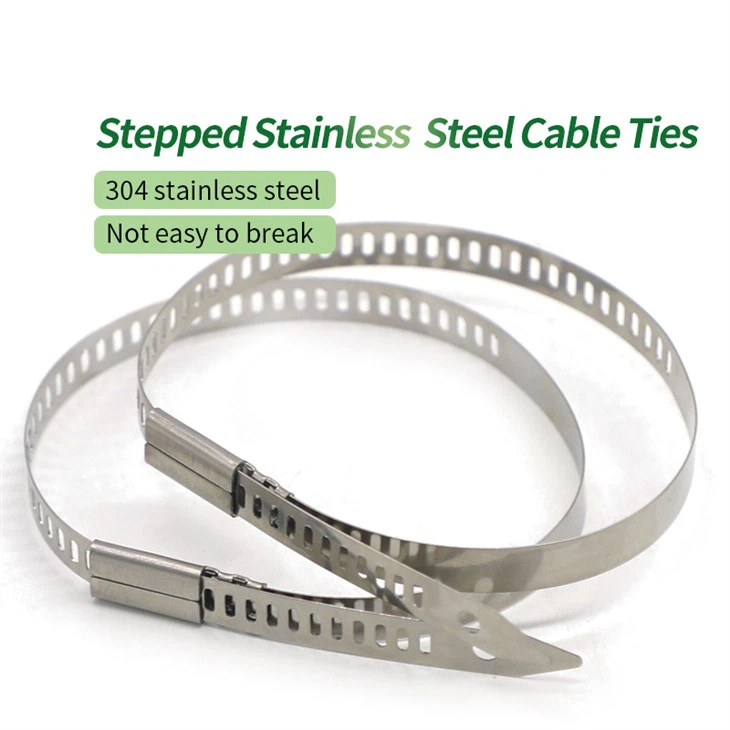
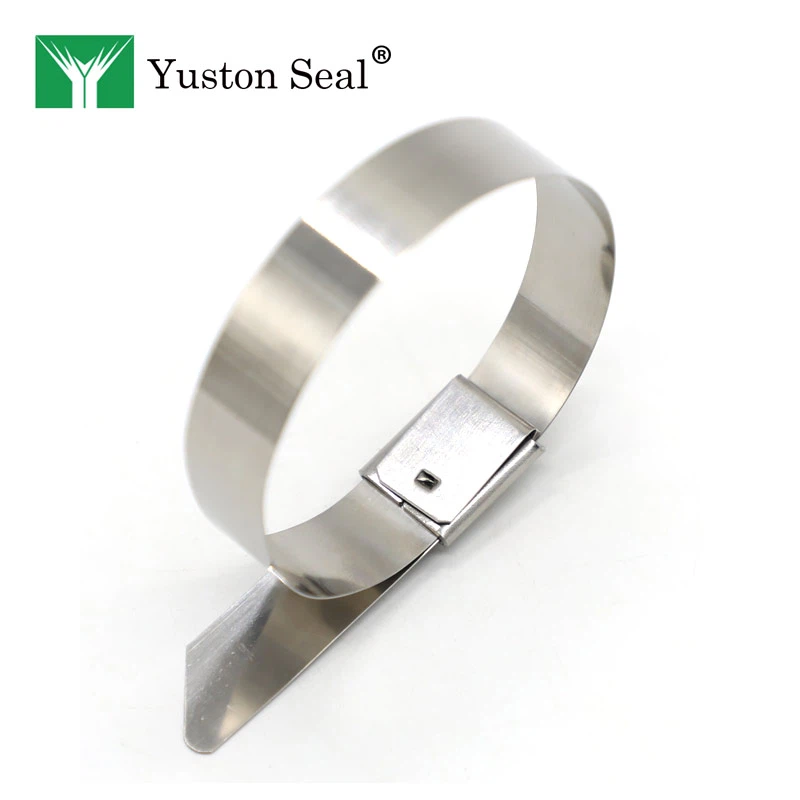
Young's Modulus of Stainless Steel Ties
Stainless steel is a popular material for cable ties due to its excellent corrosion resistance, strength, and durability. The Young's modulus of stainless steel can vary depending on its specific alloy and heat treatment. However, for most common stainless steel grades used in cable ties, the Young's modulus typically ranges from about 190 to 210 gigapascals (GPa).
This relatively high Young's modulus means that stainless steel ties are quite stiff. They can withstand significant forces without undergoing excessive deformation. For example, when used to secure heavy cables or objects, stainless steel ties can maintain their shape and integrity, providing a reliable and long - lasting fastening solution.
Significance of Young's Modulus for Stainless Steel Ties
The Young's modulus plays a vital role in the performance of stainless steel ties in various applications. Here are some key aspects:
Load - Bearing Capacity
A higher Young's modulus indicates that the stainless steel tie can support greater loads without excessive stretching. In applications where heavy cables or equipment need to be secured, ties with a high Young's modulus are preferred. For instance, in industrial settings where large electrical cables are bundled together, stainless steel ties with a high stiffness can prevent the cables from sagging or coming loose over time.
Installation and Adjustment
The stiffness of stainless steel ties, as determined by the Young's modulus, also affects the installation process. Ties with a high Young's modulus may require more force to bend or adjust during installation. However, this also means that once they are properly installed, they are less likely to loosen or deform due to vibrations or minor impacts.
Long - Term Performance
Over time, materials can experience creep (slow, permanent deformation under a constant load). Stainless steel ties with a high Young's modulus are more resistant to creep, ensuring that they maintain their fastening strength and shape over the long term. This is particularly important in outdoor or harsh environments where the ties may be exposed to temperature variations, moisture, and mechanical stress.
Our Stainless Steel Tie Products
As a leading supplier of stainless steel ties, we offer a wide range of products to meet the diverse needs of our customers. Our Metal Cable Ties are made from high - quality stainless steel alloys with a well - defined Young's modulus, ensuring reliable performance in various applications.
We also provide Stainless Steel Cable Ties and Stainless Steel Cable Wire Ties in different sizes and configurations. Whether you need ties for small - scale electrical installations or large - scale industrial projects, we have the right solution for you.
How to Choose the Right Stainless Steel Tie
When selecting stainless steel ties, it's important to consider the Young's modulus along with other factors such as the size of the tie, its breaking strength, and corrosion resistance. Here are some tips to help you make the right choice:
Application Requirements
Determine the specific requirements of your application. If you need to secure heavy objects, choose ties with a higher Young's modulus and breaking strength. For applications where flexibility is more important, you may need to balance the stiffness with other properties.
Environmental Conditions
Consider the environment in which the ties will be used. If the ties will be exposed to corrosive substances or high humidity, choose stainless steel ties with excellent corrosion resistance.
Compatibility
Ensure that the size and shape of the stainless steel tie are compatible with the objects you need to secure. Using the wrong size tie can lead to improper fastening and reduced performance.
Conclusion
The Young's modulus is a critical property of stainless steel ties that affects their load - bearing capacity, installation, and long - term performance. As a supplier, we understand the importance of providing high - quality stainless steel ties with well - defined mechanical properties.
If you are in the market for stainless steel ties, we invite you to explore our product range. Our team of experts is ready to assist you in choosing the right ties for your specific needs. Contact us today to start a discussion about your procurement requirements, and let us help you find the perfect fastening solution for your projects.
References
- Callister, W. D., & Rethwisch, D. G. (2010). Materials Science and Engineering: An Introduction. Wiley.
- ASM Handbook Committee. (1990). ASM Handbook Volume 1: Properties and Selection: Irons, Steels, and High - Performance Alloys. ASM International.