


Bolt Seal
Why Choose Us
Quality Control
We have professional personnel to monitor the production process, inspect the products and ensure that the final product meets the required quality level standards, guidelines and specifications.
Advanced Equipment
Our company has professional production of more than 360 blockade equipment, covering an area of more than 10,000 square acres, become a comprehensive and capable enterprise integrating R&D, design, production and sales.
Customized Services
We understand that each customer has unique manufacturing needs. That's why we offer customization options to cater to your specific requirements.
Our Certificates
Many of our products have passed ISO 9001, ISO 14001 certification and OHSAS 18001 certification.
What is Bolt Seal
A bolt seal is a strong type of security seal that is applied for sealing transports. Bolt seals are one time useable and are often uniquely numbered. Because of their great breaking strength they also provide an extra layer of security. In this post you will learn more about bolt seals and their applications.Bolt seals are types of security seals that are applied to containers and trucks to ensure cargo isn't tampered with in transit. Specifically, a bolt seal is a high security truck seal that is designed to be both tamper evident and difficult to open. This double function ensures that when a sender packs and seals a delivery, they know the load wasn't accessed by anyone without the sender knowing about it. If you've ever seen a semi-truck driving down the road with what looks like a brightly colored bolt holding the back door closed, that was a bolt seal.


Tamper Evidence
Bolt seals are designed to show clear signs of tampering, such as visible damage to the locking mechanism or broken seals. This makes it easy to identify if someone has attempted to gain unauthorised access to the container.
Security
Bolt seals provide an extra layer of security, deterring theft and unauthorised entry. This is particularly important for high-value or sensitive cargo.
Ease of Use
Bolt seals are easy to apply and hard remove, reducing the time required for loading. Authorised personnel can quickly secure the containers without the need for specialised tools.
Versatility
Bolt seals can be used not only on shipping containers but also on various types of cargo-carrying vehicles, trailers, and storage units.
Compliance
Many international regulations and customs authorities require the use of bolt seals for securing containers during transit. Adhering to these regulations helps prevent delays and ensures smooth cross-border movements.
Application of Bolt Seal
Transportation and Logistics
In the realm of transportation and logistics, security bolt seals are vital for securing cargo containers and trailers. As goods move across borders and through various distribution points, maintaining their integrity is paramount. Security bolt seals provide a visible deterrent to tampering and unauthorized access, ensuring that shipments arrive as intended. For instance, a case study involving a major logistics company highlighted the use of these seals to prevent pilferage during international shipping. The seal's unique serial numbers and tamper-evident features helped track and secure thousands of containers, showcasing their effectiveness in maintaining cargo security throughout the supply chain.
Warehousing and Storage
In warehousing and storage environments, security bolt seals are employed to protect stored goods and prevent unauthorized access. Warehouses often hold valuable or sensitive items, and ensuring their security is critical to prevent theft and loss. Security bolt seals can be used to secure warehouse doors, storage units, and inventory, providing a clear indication if tampering has occurred. For example, a large retail chain implemented security bolt seals in its distribution centers to safeguard high-value electronics. The seal's tamper-evident design helped in quickly identifying and addressing any breaches, thus enhancing overall security and operational efficiency.
Government and Critical Infrastructure
Government facilities and critical infrastructure require heightened security measures to protect sensitive information and essential services. Security bolt seals are used to secure access points and equipment related to electrical grids, water systems, and other vital infrastructure. Their robust design ensures that any attempts to tamper with or access these critical systems are immediately evident. For instance, a national utility provider employed security bolt seals to protect control panels and access points in their facilities. The seal's ability to withstand harsh environmental conditions and provide clear evidence of tampering proved invaluable in maintaining the security and functionality of essential services.
Retail and Supply Chain Management
In the retail sector, security bolt seals are crucial for preventing theft and tampering with products. Retailers and supply chain managers use these seals to secure merchandise during transit and while on store shelves. By employing security bolt seals, retailers can minimize losses and maintain customer trust. For example, a global consumer goods company used security bolt seals to monitor the movement of products from manufacturing plants to retail outlets. This practice helped prevent product theft and ensured that items on the shelves were authentic and untampered with, thereby protecting both the brand and consumers.
Four Key Features of Bolt Seals
Regulation compliance
A major feature that differentiates bolt seals from other security seals is compliance with local and international shipping regulations. All bolt seals from American Casting and Manufacturing are C-TPAT Compliant and ISO 17712 certified, fully meeting the requirements of a high-security seal.Bolt seals must go through heavy-duty strength and durability testing to meet these strict standards. This means that your cargo will be heavily secured in transit, while conforming to legal regulations.
Easy application & tough removal
An additional advantage of a bolt seal should be easy application and challenging removal. The application of a bolt seal should take less than 30 seconds, making them easy to apply and secure to any container or door as needed. Despite the efficient application, however, bolt seals are tough seals to break. Their high-security classification means they're only removable with a bolt cutter, cutting down on the risk of any theft or tampering.

Customizability
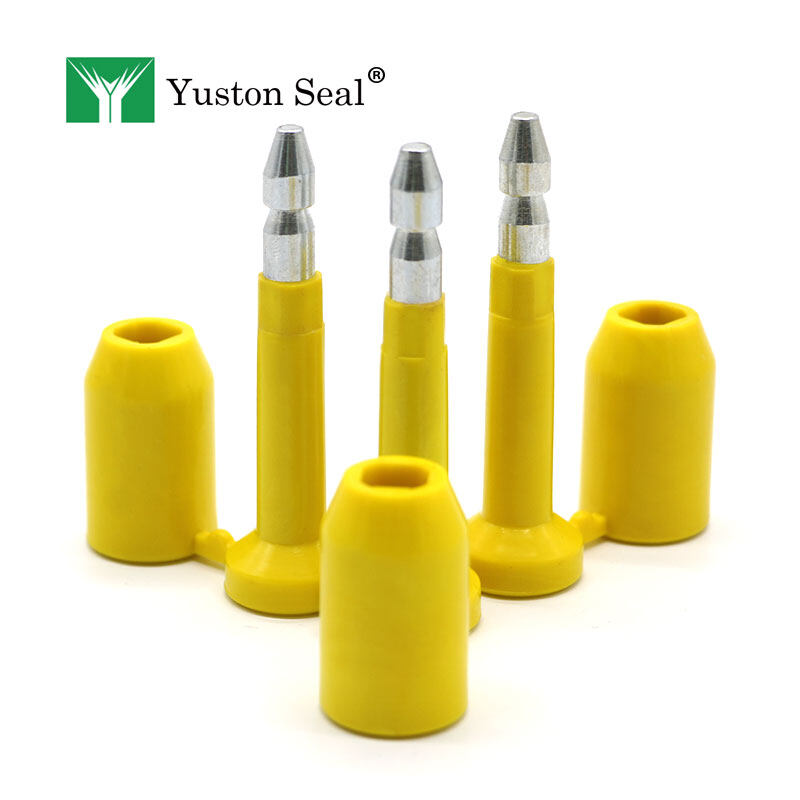
Bolt seals are highly customizable in terms of numbering and color. Marked with unique numbering on each seal set, you can easily track the seals journey with accurate record-keeping. The variety of colors that bolt seals are available in mean they match your company's branding or be used as a piece of a great color-coded security regime.
Specific features
Bolt seals can have a variety of other security features that can be fit to a customer's needs. For example, there are flexible bolt seals, made for latches that might not line up perfectly but still need the secure protection a bolt seal offers. They're also useful if there's any misshapen holes or safety concerns with puncturing tires. Bolt seals can also be anti-spin bolt seals, which prevents the bolt from spinning inside the seal. This can be useful in high-risk areas with higher tampering concerns, as the bolt cannot be physically moved in its sealed position unless cut with a bolt cutter.
How to Choose Bolt Seal
Understanding Your Security Requirements
Before selecting a barrier bolt seal, it's essential to assess your specific security needs. Identify the threats you need to mitigate, whether it's unauthorized access, theft, or tampering. Regulatory compliance might also be a critical factor for industries dealing with sensitive cargo or equipment. Choosing a seal that meets industry standards ensures adherence to security protocols and regulatory requirements, bolstering overall security measures.
Evaluating Durability and Material
Durability is paramount in high-security applications where seals must withstand harsh conditions and potential tampering attempts. Common materials for barrier bolt seals include robust options like steel and hardened alloys, prized for their strength and resistance to manipulation. Evaluate the pros and cons of each material based on your operational environment to ensure longevity and reliability.
Considering Tamper-Resistance Features
Effective barrier seals incorporate advanced tamper-resistant technologies to deter unauthorized access. Features such as unique serial numbers, custom markings, or advanced locking mechanisms enhance security by making tampering immediately noticeable. These features not only prevent breaches but also provide traceability and accountability in supply chain management and asset protection.
Assessing Compatibility and Ease of Use
Integration with existing security systems is crucial for seamless operations. Ensure the barrier seal is compatible with RFID readers or other tracking technologies used in your facility. Additionally, the ease of installation and removal processes should be considered to minimize downtime while maintaining stringent security standards. A balance between robust security and operational convenience is key to maximizing efficiency.
Budget and Cost Considerations
While security is paramount, balancing cost-effectiveness is also essential. Consider the initial investment versus long-term savings and operational benefits. High-quality barrier seals may incur higher upfront costs but offer superior durability and reliability, minimizing replacement and operational disruption expenses over time.
Research reliable manufacturers and suppliers
When investing in high-security barrier seals, it is critical to choose a reputable manufacturer. Choose a manufacturer with a proven track record of producing quality seals that meet industry standards. Established suppliers typically provide excellent customer support, ensuring timely assistance and reliable product delivery, which is essential to maintaining uninterrupted operations.
Process of Bolt Seal
The manufacturing process of bolt seals begins with the selection of raw materials. The most common materials used to make bolt seals include carbon steel & stainless steel. These materials are chosen for their durability, corrosion resistance, and ability to withstand high levels of stress.
Once the raw materials have been selected, they are cut to the appropriate length and shape using a cutting machine. The next step is to form the shank, or body, of the bolt seal. This is typically done using a cold-forming process, where the metal is shaped under high pressure and without the use of heat. This process allows for the metal to retain its strength and integrity, making it ideal for use in security seals.
After the shank has been formed, it is then passed through a series of machines that are used to add various features to the bolt seal. The next step is to add the locking mechanism. This locking mechanism is what provides the bolt seal with its tamper-evident feature, as it will break if someone tries to remove it.
The final step in the manufacturing process is the application of a coating to the bolt seal. This coating is typically a paint or a plastic that is applied to the surface of the bolt seal to provide additional protection against corrosion and wear.
How Do You Use a Bolt Seal?
Record or confirm the correct serial number for the bolt seal
Since each seal has a unique tracking number, it is important that the correct individual seal is used and recorded.
Separate the bolt from the cap
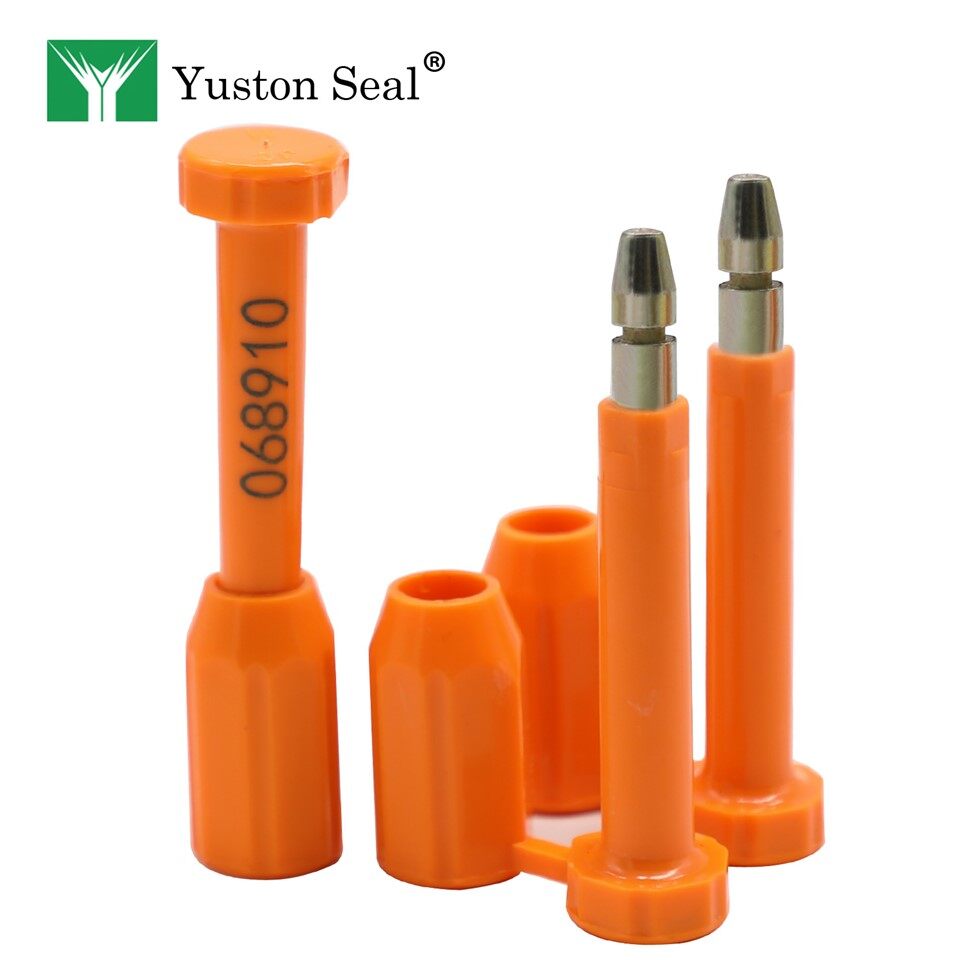
Each bolt seal has two parts: the plastic-topped metal bolt portion and the cap. These two parts come connected together by a piece of thin plastic designed to be broken apart by hand before application.
Insert the bolt through the door latch
Each container style may have a slightly different latch setup, but there will be two metal components with holes that line up when the door is closed designed to place a bolt through.
Apply the cap
Push the cap onto the metal end of the bolt once it is in place. Caps are designed to be able to be applied easily by hand, but not removed.
Our Factory
Shandong Yuston New Material Co., Ltd.Quality supplier is located in the beautiful coast of Bohai sea - Dezhou, China. It is an integrated and high-level enterprise with the ability to research and development, design, produce, and sales; and it has professional factory which produce plastic seals, stopcock, cable seals, meter seals, bolt seals, RFID electronic seals, plastic cable seals, containers, and GPS seals. Yutong is an excellent manufacturer and exporter of security seals in China.


Certificate


FAQ
As one of the leading bolt seal manufacturers and suppliers in China, we warmly welcome you to buy high-grade bolt seal for sale here from our factory. All our products are with high quality and competitive price.
plastic bolt seal, Security Bolt Seals, truck seal