


Cable Seal
Why Choose Us
Quality Control
We have professional personnel to monitor the production process, inspect the products and ensure that the final product meets the required quality level standards, guidelines and specifications.
Advanced Equipment
Our company has professional production of more than 360 blockade equipment, covering an area of more than 10,000 square acres, become a comprehensive and capable enterprise integrating R&D, design, production and sales.
Customized Services
We understand that each customer has unique manufacturing needs. That's why we offer customization options to cater to your specific requirements.
Our Certificates
Many of our products have passed ISO 9001, ISO 14001 certification and OHSAS 18001 certification.
What is Cable Seal
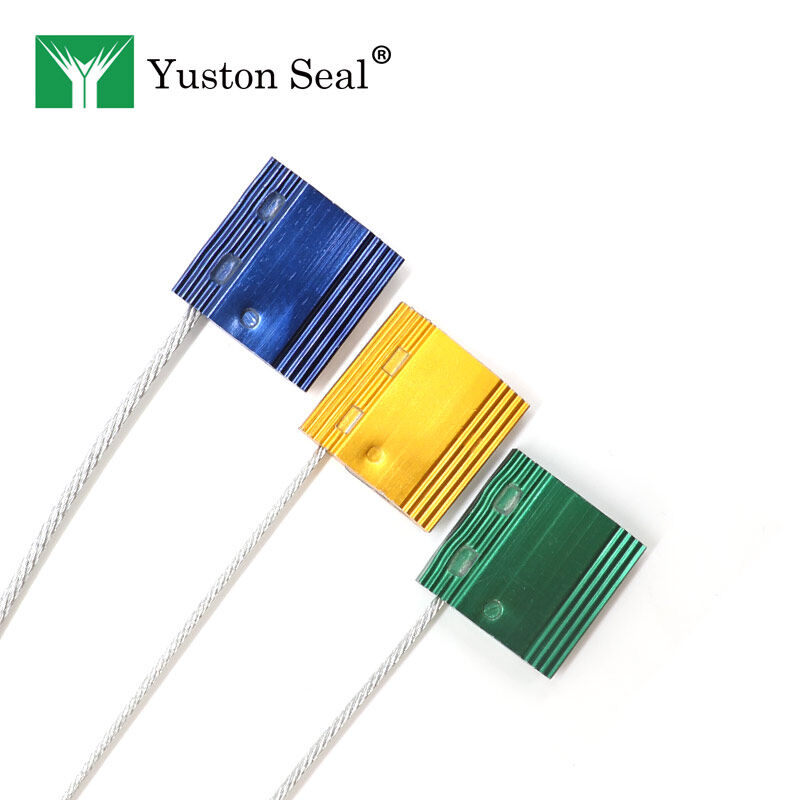
Cable security seals, also known simply as ‘cable seals’ or wire rope seals, are flexible and strong types of security seals popular across all types of industries, including freight and transport, food and pharmaceutical, industrial and manufacturing and other sectors.Cable seals generally consist of a metal or plastic body, with the cable / wire rope permanently cinched or clamped at one side of the body, and with a one-way tamper-evident locking chamber at the other end of the body. The wire rope is inserted into this locking chamber and progressively tightened to suit the application. The seal can only be opened by cutting the cable; our cable seals feature non-preformed cable which frays when cut, preventing re-insertion and providing a clear indication of seal tampering.


Benefits of Cable Seal
Weather Protection
Reliable seals are crucial for systems exposed to hazardous weather conditions. For example, electrical wiring outside is necessary to connect buildings to the power grid and run the power grid. However, these wires are exposed to rain, snow, and other hazardous elements that usually fry any electrical system. Connector seals provide the necessary protection to ensure systems are reliable.
Longer Lifespan
A fried electrical system can instantly cost thousands in repairs or replacements. You’ll also have to replace valuable equipment if the short in the electrical system causes damage. Protecting electrical systems can instantly help them last longer, preserving business operations and ensuring your equipment lasts as long as possible. Preventing problems like exposure to weather and corrosion is one of the most cost-effective methods of dealing with these issues.
Easily Submersible
Many industries require electrical wiring that is submerged in water or fluid. This is seen in oil rigs in the middle of the ocean or marine applications. Some industries have hazardous conditions that mean electrical components and systems are exposed to constant water, even if they aren’t submerged in water. These situations call for cable connectors seals that help protect the electrical components from potential damage and are necessary to adhere to safety regulations.
Diverse Applications
Cable Seal can be used in various industries and for different applications to provide enhanced safety. Aerospace and defense industries utilize them for necessary components that may be exposed to liquid or as a precaution in case something goes wrong. They are frequently used in the oil and gas industries. Marine industries must use them to comply with safety regulations.
Types of Cable Seal
Indicative (I) seals
Indicative seals are the most commonly used type and are found in countless applications. They serve the function of providing tamper evidence, but are easily broken or cut open with common tools or sometimes by hand. They are often called tamper-evident seals or tamper seals, although every security seal we offer provides tamper evidence.These include almost any closure, like totes, drums bags, wheel carts, ballot boxes, control levers, valves, money bags, and more. Many trucks are secured with indicative seals. Also, stationary closures such as utility meters, cabinets, lockers, storage bins, and cages.
Security (S) Seals
These are of intermediate strength and require a stronger or larger tool (and more effort) to cut open than do indicative seals. Added strength helps avoid accidental breaking in rough applications, or easy entry without tools. The most popular among these are cable seals which are found on many of the same applications as indicative seals. They are used on higher value or higher risk functions such as fuel tankers, hazmat, high value utility meters, and sensitive entry or access points. Processing valves and controls for chemicals and other highly sensitive industries are users of this seal type.
High Security (H) Seals
The standard testing for this category specifies minimum resistance to specific levels of pull, bending and crushing. All certified High Security seals are stamped with the letter (H) and the identity of the manufacturer. Most common uses are for international shipment via ocean containers, or doors on rail cars and long-haul trucks. AC&M offers a range of (H) certified seals of both bolt type and cable type. All seals with the “H” certification must have a test certificate from an independent ISO approved facility. AC&M can provide that certificate for our High Security Seals.
Application of Cable Seal
Securing Shipping Containers
Cable seals are a cornerstone of global trade, safeguarding valuable cargo in shipping containers. Their tamper-evident design deters unauthorized access and provides clear evidence of tampering during transport. Choosing a high-security cable seal with a strong cable and unique locking mechanism discourages theft attempts and ensures the integrity of your shipment.
Trucking Industry
Cable seals play a vital role in securing truck trailers and cargo doors. They prevent unauthorized access to sensitive materials and deter pilfering during transport. The adjustable nature of pull-up cable seals allows for a secure fit on various trailer types, while the robust cable construction offers superior resistance to cutting tools compared to plastic security seals.
Protecting Utilities
Cable seals safeguard critical utility infrastructure, such as meter boxes and control panels. This deters tampering with meters, which can lead to revenue loss for utility companies. Choosing a weatherproof cable seal ensures it can withstand harsh elements and maintain its integrity over time.
Fire Safety
Cable seals can be used to secure fire extinguisher cabinets, ensuring extinguishers are readily available in case of emergencies. This prevents unauthorized removal or tampering with these lifesaving tools. Using a brightly colored cable seal also increases visibility, making it easier to locate extinguishers during critical moments.
Machinery and Equipment
Cable seals can be used to secure hatches and access points on valuable machinery and equipment. This discourages unauthorized access and protects sensitive internal components. Choosing a cable seal with a unique serial number allows for easy identification and tracking of equipment access.
Cable Seal Material
Galvanized Steel
A champion of strength, galvanized steel cable seals are ideal for high security applications. This high security seal offers superior tamper evident properties and excellent weather resistance. However, weight can be a consideration, and potential scratching of delicate surfaces is a possibility.
Plastic
A lightweight and often more economical option, plastic security seals are suitable for lower-risk applications or indoor use. While some plastic cable seals offer decent strength, they generally fall short compared to steel in terms of tamper resistance.
Beyond the Basics
For outdoor applications, consider UV resistance as a factor. Certain plastics formulated for UV resistance can withstand extended sun exposure without degrading.
How to Choose Cable Seal
Understand the purpose of the security seal
When you have to choose a security seal, then you need to have a clear idea about how the seals will get used in the first place. Secondly, you also need to consider the value of the products for which the seals will get used.
Differing between different seal types
When you get concerned about the theft of your products, then consider going for barrier seals. Cable and bolt seals fall in the category of the barrier seals. The best thing about barrier seals is that they are high-security seals.Cable seals are a viable option because they get manufactured from zinc. They are lasting and provide the needed protection to your items. Bolt seals are also a great option because they provide added protection to your items. The bolt seals cannot be removed with ease.
Cable Material
The material of your cable seal is a critical decision, impacting its strength, durability, and suitability for your environment. Here's a breakdown of common materials:Galvanized Steel: A champion of strength, galvanized steel cable seals are ideal for high security applications. This high security seal offers superior tamper evident properties and excellent weather resistance. However, weight can be a consideration, and potential scratching of delicate surfaces is a possibility.
Additional Considerations for Maximum Security
Beyond length and material, here are some other factors to consider when choosing a cable seal:Strength (Tensile Strength): Select a seal with sufficient tensile strength to withstand the potential force it might encounter. High value assets or applications with a high risk of tampering may necessitate a stronger cable seal.Locking Mechanism: Cable seals come with various locking mechanisms, such as pull-tight or bolt seals. Pull tight strap seals offer ease of use, while bolt seals provide a more robust tamper-evident solution. Choose the mechanism that best suits your application's security needs.
How to Make Cable Seals Useful and Effective

Layered Technology

Multi-Step Inspection Process

Seal Variation
Our Factory
Shandong Yuston New Material Co., Ltd.Quality supplier is located in the beautiful coast of Bohai sea - Dezhou, China. It is an integrated and high-level enterprise with the ability to research and development, design, produce, and sales; and it has professional factory which produce plastic seals, stopcock, cable seals, meter seals, bolt seals, RFID electronic seals, plastic cable seals, containers, and GPS seals. Yutong is an excellent manufacturer and exporter of security seals in China.


Certificate


FAQ
As one of the leading cable seal manufacturers and suppliers in China, we warmly welcome you to buy high-grade cable seal for sale here from our factory. All our products are with high quality and competitive price.
Container Cable Seal, Hexagonal Cable Seal, Wire Container Seals